
Introduction
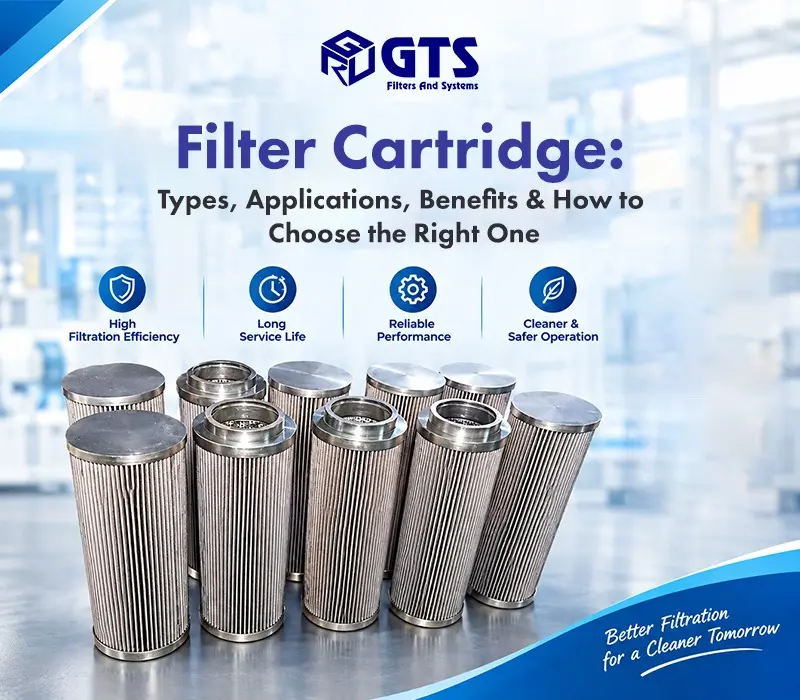
Filter Cartridges play an important role in keeping industrial and commercial processes running smoothly, yet they rarely get the attention they deserve until a problem shows up. A sudden pressure drop, a pump wearing out faster than expected, or a batch that fails quality checks can often be traced back to one thing: the wrong cartridge in the system. Choosing the right one isn’t just about fitting the housing correctly; it depends on the material, micron rating, and construction, all of which affect filtration efficiency and how long the cartridge lasts before it needs replacing. A pleated filter cartridge performs very differently from a stainless steel one, and using the wrong type for your process can lead to frequent clogging and higher maintenance costs. This blog covers the different types of cartridges available, where each one is best suited, and how to choose the right one for your specific application.
What Does a Filter Cartridge Do?
A filter cartridge is a replaceable filtration element that fits inside a housing and physically catches particles as fluid or gas moves through it. The design changes a lot depending on the work. Some cartridges fold their media to pack more surface area into a small space; others use woven or sintered metal mesh built to survive harsh conditions. But the underlying work stays the same no matter which design you’re looking at: hold the contaminants back, let the clean stream through. The cartridge’s micron rating decides how small a particle it catches, and that number needs to match what the process needs.
The Main Filter Cartridge Types Worth Knowing
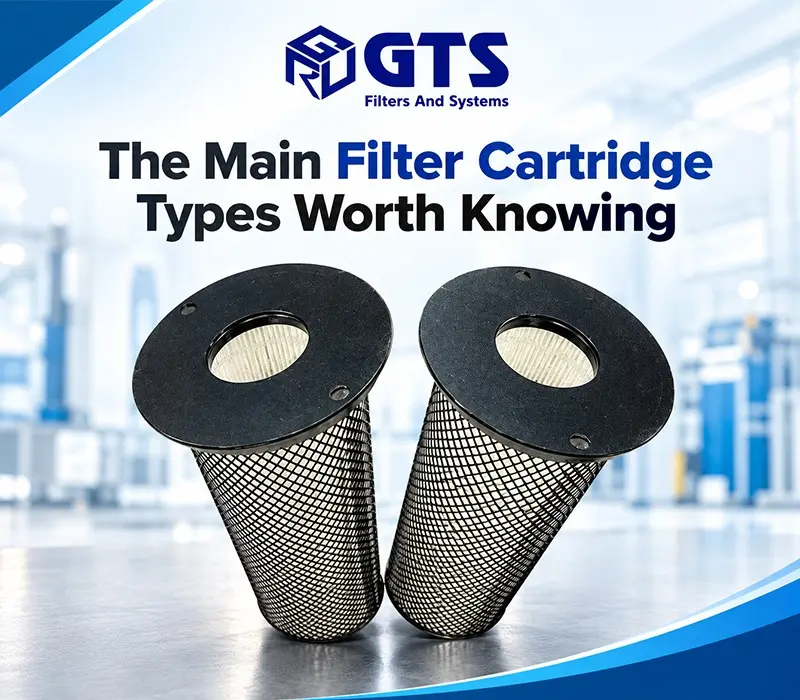
Different type of work requires different types of cartridge designs, and knowing all the types saves a fair amount of time. The main types of cartridge are:
Pleated Filter Cartridges
A Pleated Filter Cartridge folds its media into accordion-style pleats around a central core, and that folding roughly doubles the usable filtration area compared to a flat or cylindrical design of the same size. More surface area means more dirt-holding capacity, and more dirt-holding capacity means a longer stretch before the cartridge needs replacing or cleaning. This design shows up constantly in water treatment and chemical processing, basically anywhere flow rate and cartridge lifespan both matter.
SS Filter Cartridge (Stainless Steel)
An SS Filter Cartridge is built from stainless steel, usually 304 or 316L grade, either as woven mesh, sintered mesh, or sintered metal fiber felt. The extra cost buys durability under conditions that would wreck plastic or cellulose media outright: high temperature, high pressure, aggressive chemicals. Stainless steel also holds up to repeated cleaning far better, which matters a lot once you’re in an operation where swapping cartridges every few weeks just isn’t affordable.
Other Common Materials
Polypropylene and cellulose cartridges cost less and do the work fine for lighter-duty filtration where extreme temperature or chemical resistance isn’t really a factor. Membrane cartridges handle the finest filtration levels, down to sub-micron ratings, and they’re common in sterile or high-purity work like pharmaceuticals and electronics manufacturing.
Where Industrial Filter Cartridges Get Used
An Industrial Filter Cartridge is used in a lot of different places, and each one asks something slightly different of it. Here are different industries where this cartridge is used:
- Water treatment leans on cartridges to strip out sediment and particulates before water moves further through the system.
- Chemical processing often needs stainless steel or specialty media cartridges tough enough to handle aggressive or corrosive fluids without breaking down.
- Food and pharmaceutical production needs cartridges that meet strict hygiene standards and can survive sterilization, since contamination here isn’t just a quality issue; it’s a safety one.
- Oil and petrochemical refining uses filter cartridges to pull impurities like sulfur and particulate matter out of crude oil and process fluids.
- Electronics manufacturing needs filtration fine enough to keep particles from contaminating sensitive components during production.
Benefits of Choosing the Right Cartridge
Getting the selection right pays off in ways that go well past just cleaner output. Major benefits of this cartridge are as follows:
- Consistent product quality comes from filtration that hits its rated micron level reliably, batch after batch.
- Lower operating costs over time follow from picking a filter cartridge with the right dirt-holding capacity and cleaning tolerance for your process, instead of constantly replacing something undersized.
- Reduced downtime happens when a cartridge matches your pressure and flow conditions, since mismatched cartridges tend to clog or fail without much warning.
- Regulatory compliance in food, pharma, and water treatment rides directly on filtration meeting whatever standard those industries require.
How to Choose the Right Filter Cartridge
A handful of practical questions cut through most of the confusion around picking one. For selecting the right cartridge, these are some of the questions you should have an answer to:
- What micron rating does the process need, based on the particle size that has to come out?
- What temperature, pressure, and chemical exposure will the cartridge deal with day-to-day?
- Does the application call for something disposable, or one built for repeated cleaning and reuse, the way most SS filter cartridge designs are?
- What flow rate does the system need to hold, and does the cartridge’s surface area support that without excessive pressure drop?
Answer these questions before ordering, and you’ll skip a lot of wasted money on cartridges that technically filter but don’t actually fit the working requirements.
Mistakes That Shorten a Filter Cartridge’s Life
Even a well-specified cartridge underperforms when a few operational details slip through, and these mistakes show up across nearly every industry that depends on filtration. Some of the mistakes that affect the life of the cartridge are:
- Choosing based on price alone without checking chemical or temperature compatibility with the process fluid.
- Ignoring pressure drop specifications, which leads to premature clogging or reduced flow.
- Reusing a cartridge past its rated cleaning cycles, which degrades the filtration performance nobody notices right away.
- Mismatching housing seals and cartridge end caps, which causes bypass and lets unfiltered fluid slip through undetected.
None of these mistakes need a design flaw to cause damage. They just need nobody catching them until output quality or system pressure already shows it.
Conclusion
Choosing the right filter cartridge comes down to matching material, pore rating, and construction to what your process actually demands, not just grabbing whatever fits the housing. Get that match right, and the cartridge becomes something you rarely think about again, which is exactly the point. At Guru Technology, we help operations across industries find that fit, so filtration stays reliable instead of becoming the next problem on the list.