Introduction
Every liquid moving through a pipeline carries some dirt. It may be rust, scale, weld slag or fine sediment. Over time, these particles damage pumps, clog nozzles and wear out valves.
The usual answer is to fit a filter. But in a process plant, stopping the line every time the filter gets dirty is costly. This is the problem a Duplex Filter solves. This blog explains how it works, where it is used and what buyers should check before ordering.
What Is a Duplex Filter?
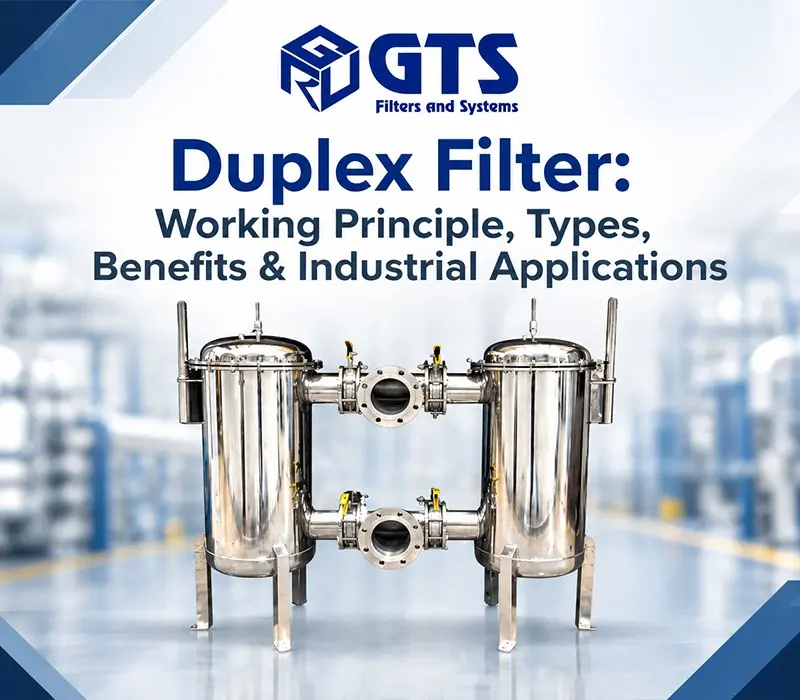
A duplex filter is a filtration device with two parallel chambers joined by a changeover valve. Only one chamber works at a time. The other is kept clean as a backup. When the working chamber gets blocked with dirt, the operator moves the flow to the clean chamber and cleans the first one.
You may also hear it called a Duplex Basket Filter or a Dual Basket Filter, because each chamber holds a basket that traps solid particles. Some buyers use the term Dual Basket Strainer, mostly when the goal is to remove larger debris and protect pumps, valves and meters.
The main problem it solves is simple. Many plants cannot stop a process just to clean a filter. A single filter forces a shutdown every time it clogs. A duplex unit removes that problem.
How Does a Duplex Filter Work?
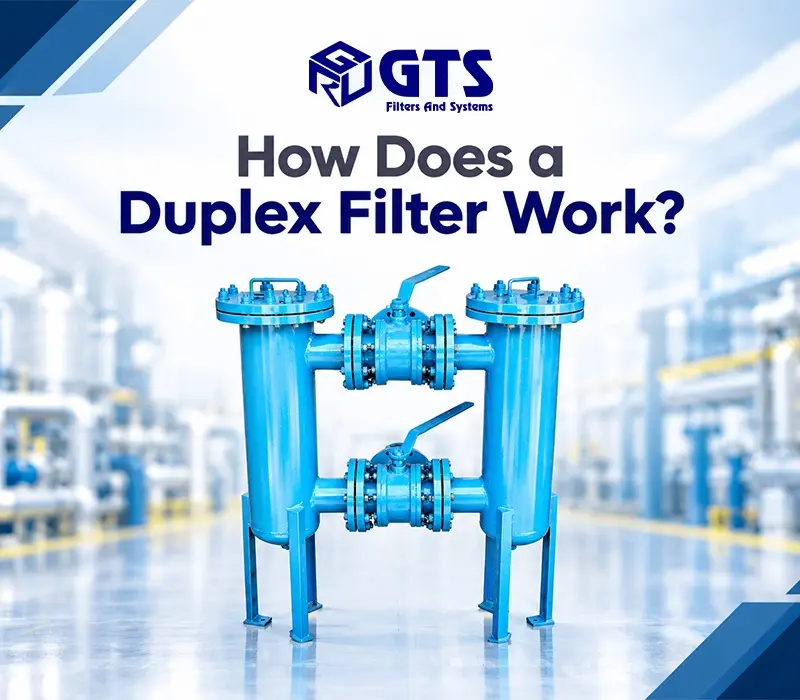
The working of this filter is simple and has no complicated steps.
- The fluid enters through the common inlet.
- The changeover valve directs it to chamber A.
- The fluid passes through the basket, and solid particles stay inside it.
- Clean fluid leaves through the outlet.
- A pressure gauge shows the pressure drop across the filter.
- When the pressure drop rises, the operator turns the valve to chamber B.
- Chamber A is then isolated, drained and cleaned while chamber B takes over.
The key point is that the flow never stops. The valve is built so that at least one chamber stays open during the switch, which avoids pressure surges.
Types of Duplex Filters
There are several designs, and the right one depends on the fluid and the process. A Duplex Filter Housing is generally classified in the following ways.
By construction
- Fabricated type: made from welded steel plates and pipes. It suits larger sizes and custom needs.
- Cast type: made from cast body material. It suits standard sizes and moderate pressures.
By material
- Mild steel or carbon steel: economical, suited to oils, fuels and non-corrosive fluids.
- Stainless steel: preferred for chemicals, food, pharma and corrosive services.
By filter element
- Perforated basket: removes coarse particles.
- Wire mesh basket: gives finer filtration.
A dual basket strainer is closely related. In general, a strainer removes larger particles and a filter handles finer ones, but in daily use the two terms are often mixed up.
By valve operation
- Manual changeover: operated by hand wheel or lever.
- Automated changeover: uses an actuator for remote or unattended plants.
Key Benefits
A well-designed duplex filtration system offers practical advantages that go beyond filtering.
- Continuous operation: no need to stop the process for cleaning.
- Equipment protection: pumps, heat exchangers and flow meters stay safe from debris.
- Lower maintenance cost: cleaning is quick, and baskets can be reused many times.
- Steady pressure and flow: the smooth changeover avoids sudden shocks.
- Flexibility: different basket meshes can be used for different fluids.
- Safer working: the standby chamber can be isolated and drained before it is opened.
Industrial Applications
An industrial duplex filter is used in almost every sector that handles liquids or gases in pipelines. Common examples include:
- Oil and gas, for fuel, crude and lubricating oil lines
- Chemical and petrochemical plants
- Power plants, for cooling water and fuel oil systems
- Water and wastewater treatment
- Food and beverage, for syrups, edible oils and milk products
- Pharmaceutical and paint manufacturing
- Marine and shipbuilding, for fuel and ballast systems
- Steel, cement and textile industries
In most of these cases, the filter sits just before a pump, compressor or other sensitive equipment.
Points to Check Before Buying
Bulk buyers and project teams should confirm these details before placing an order.
- Flow rate and line size: the filter must handle peak flow without a high pressure drop.
- Fluid type and viscosity: thick fluids need larger baskets and more open area.
- Operating pressure and temperature: the body and seals must suit actual conditions.
- Material of construction: match it to the fluid to avoid corrosion.
- Filtration rating: choose the mesh size according to the particle size you want to remove.
- Changeover valve type: check that it gives smooth, leak-free switching.
- End connections: flanged connections should match your piping standard.
- Testing and certification: ask for hydro test reports and material certificates.
- Service support: availability of spare baskets and gaskets matters later.
A slightly better build quality often reduces leaks and repair visits over the years.
Basic Maintenance Tips
A duplex filter needs little attention, but a few habits keep it working well.
- Watch the pressure gauge and switch chambers at the set limit.
- Always depressurise and drain the chamber before opening it.
- Clean the basket thoroughly and check it for dents or tears.
- Replace worn gaskets and seals at each service.
- Keep spare baskets in stock for quick replacement.
- Operate the changeover valve regularly so it does not seize.
Small problems found during routine checks cost much less than a blocked line or a damaged pump.
Conclusion
A duplex filter is a simple but valuable addition to any piping system where uptime matters. It protects costly equipment, keeps the process steady and makes cleaning easy. Choosing the right size, material and mesh at the start saves money and trouble later. If you need reliable, custom-built filtration units in bulk or for a single project, you can contact GTS Filters & Systems Pvt Ltd, a manufacturer and supplier known for quality and technical support.