

Introduction
In any industrial filtration system, the filter element gets most of the attention: micron ratings, media type, dirt-holding capacity. But none of that matters if the Filter Housing isn’t right for the type of work you are doing. The housing is the pressure vessel that holds the filter element, directs flow, contains contaminants, and often determines how easy the maintenance will be.
Choosing the wrong filter housing can lead to frequent clogging, excessive pressure drop, leaks, or even safety incidents. This article covers all the main types of filter housing, including duplex, basket, bag, SS, cartridge, and air filter housing, and industrial filter housing, and shows where each fits in different applications.
Where These Filter Housings Get Used
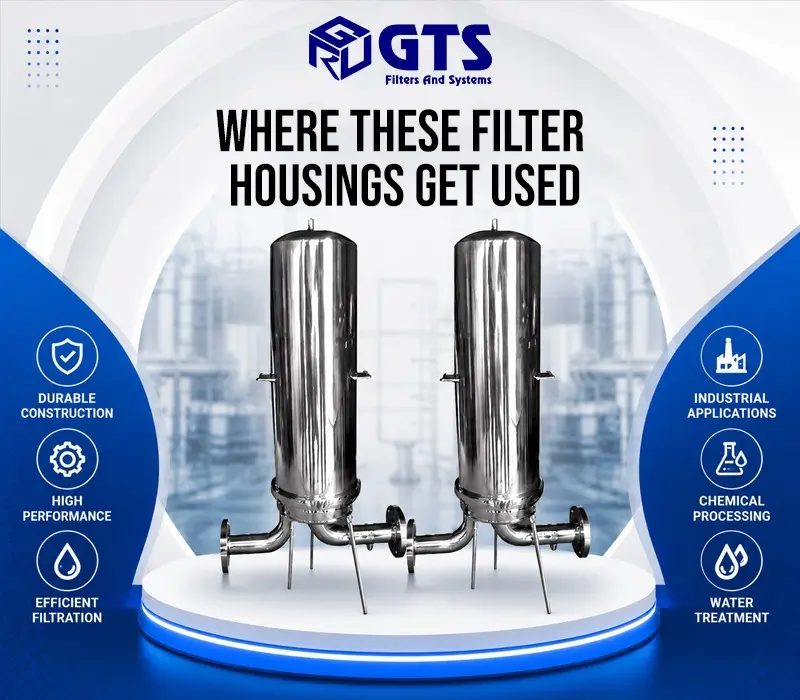
Knowing the different types of filter housing is not the same as knowing the whole working of it; where they are used in operations tells you a lot about which one fits your situation. The following are the industries where these are used:
- Water treatment plants lean heavily on cartridge and bag filter housings, especially where sediment, rust particles, or organic matter need to be pulled out before water moves further downstream.
- Pharmaceutical and food processing facilities typically reach for SS filter housing, since hygiene standards and strict contamination control leave little room for anything hard to clean or prone to corrosion.
- Chemical processing plants often depend on stainless steel housings too, mainly because so many process The Ultimate Guide to Filter Housing Types and Their Applications
- uids are aggressive enough to eat through cheaper materials over time.
- Cooling water and industrial water systems frequently use basket filter housing, since it handles larger debris well and can be cleaned out and reused instead of replaced every time.
- Continuous manufacturing lines, where stopping production for a filter change simply isn’t an option, tend to rely on duplex filter housing to keep things running without interruption.
- HVAC systems, compressed air lines, and ventilation setups call for air filter housing specifically, since none of the liquid-focused designs are built to handle how air moves and behaves under pressure.
The pattern here is pretty consistent: the application points toward the right housing type before price or brand ever really comes into the decision.
Common Types of Filter Housing and Where They Fit
Different processes call for different housing designs, not just different sizes of the same basic structure. Understanding these distinctions makes it much easier to specify the right equipment from the start. The following are the different types of filter housings:
Cartridge Filter Housing
Cartridge filter housing holds cylindrical filter cartridges, and it’s probably the design you’ll run into most often across water treatment, chemical processing, and food and beverage work.
- Handles moderate to high flow rates well, making it a solid fit for a wide range of everyday processes.
- Cartridge swaps are fairly quick and simple, which matters a lot for facilities that end up doing maintenance often.
Bag Filter Housing
Bag filter housing works differently; it uses a fabric or mesh bag hanging inside the housing, and it’s the go-to when there’s a lot of solid contamination to deal with.
- Offers more surface area than most cartridge setups, so it can hold onto more debris before it needs changing.
- Cuts down how often you need to swap filters, which is an advantage in processes with heavy particulate loads.
Basket Filter Housing
Basket filter housing swaps out the bag or cartridge for a rigid, perforated basket instead, a better fit when you’re dealing with larger particles or want something you can clean and reuse rather than throw away.
- Handles bigger debris well, which is why it shows up so often in things like cooling water systems.
- Can be cleaned and put back into service, cutting down on replacement costs over time.
Duplex Filter Housing
Duplex filter housing takes a different approach entirely; it uses two filtration chambers running side by side, so one keeps working while the other gets serviced.
- Keeps flow running without interruption, since you can switch chambers instead of shutting the whole system down.
- It is more useful for continuous processes, where stopping for a filter change just isn’t something you can afford to do.
Air Filter Housing
Air filter housing is built specifically for gas and air, not liquids, and you’ll typically find it in HVAC systems, compressed air lines, and industrial ventilation setups.
- Designed around how air reacts under pressure, which is different enough from fluid that it needs its own engineering approach.
- Not interchangeable with liquid filter housing, since the two are built for completely different work.
Conclusion
Choosing the right filter housing isn’t just a box to check after picking your filter media; it shapes how well the whole system performs. Match the housing type and material to your operating conditions, and you’ll spend a lot less time on unplanned changeouts and troubleshooting. GTS Filters And Systems (India) Pvt. Ltd. builds filter housing solutions around exactly these kinds of demands, so whatever you’re filtering, the housing holding it together won’t be the weak link.
FAQs