
Quick Summary
An oil filter removes dirt, metal particles and sludge from hydraulic, lubricating, gear and turbine oils. Most oil-related equipment failures start with contamination, so picking the right filter protects pumps, bearings and valves. This guide explains how filters work, the main types and the key steps for choosing one, including micron rating, flow, pressure and materials. It also lists common mistakes and care tips.
Table of Contents
Introduction
Oil is the lifeblood of industrial machines. It lubricates bearings, transmits power in hydraulic systems and carries heat away from hot parts. But oil does not stay clean on its own. Dust gets in, metal wears off, seals break down and moisture sneaks in.
A good filter keeps that oil healthy. A poor one lets damage build quietly until a pump fails or a valve sticks. This guide explains how to choose the right Oil Filter for your equipment, so you avoid unplanned stoppages and costly repairs.
What Is an Industrial Oil Filter?
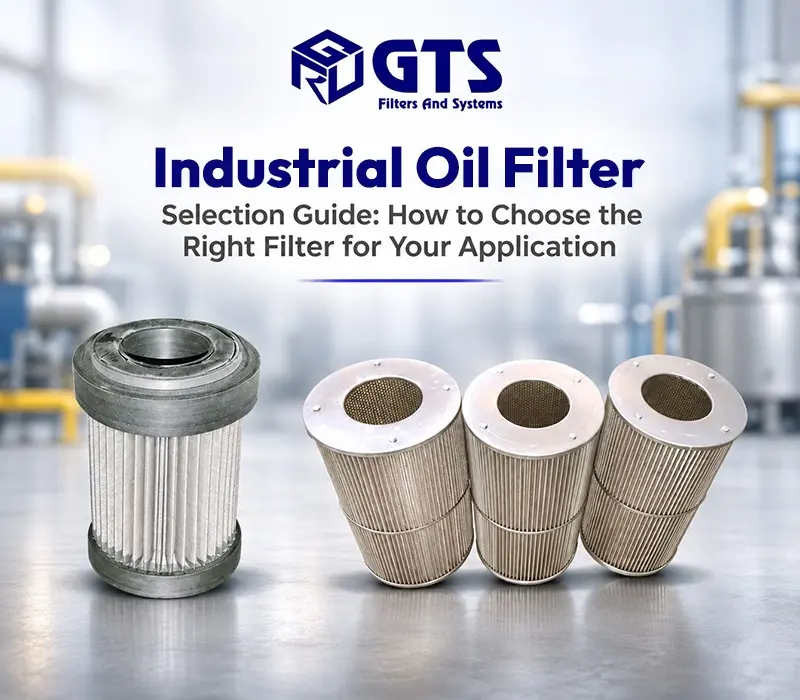
An industrial oil filter is a device that traps solid contaminants as oil passes through it. It consists of a housing and a replaceable filter element. The element is made of a porous material, such as glass fibre, cellulose or stainless steel mesh, and it stops particles while letting oil through.
Industrial filters are used in hydraulic systems, gearboxes, turbines, compressors and lubrication circuits. They look similar to automotive filters in principle, but they are built for higher flow, higher pressure and much stricter cleanliness needs.
Types of Oil Filters
By application
- Hydraulic filters: protect pumps, valves and cylinders in hydraulic systems.
- Lube filters: keep lubrication circuits in compressors, engines and turbines clean.
- Gear filters: remove wear particles from gearbox oil.
- Turbine filters: handle large volumes with strict cleanliness needs.
- Diesel and fuel filters: remove dirt and water from fuels.
By position in the system
- Suction strainers: a coarse screen before the pump to stop large particles.
- Pressure filters: fine filtration after the pump to protect sensitive valves.
- Return line filters: clean oil on its way back to the tank.
- Off-line (kidney loop) filters: a separate circuit that cleans the tank oil continuously.
By element material
- Cellulose (paper): economical, suited to general use.
- Glass fibre: higher efficiency and dirt holding capacity.
- Stainless steel mesh: coarse filtration, and in many cases cleanable and reusable.
- Synthetic media: used for special fluids and conditions.
Steps to Choose the Right Oil Filter
Step 1: Know your system and fluid
Start with the application: hydraulic, lube, gear or turbine. Note the oil type, such as mineral oil, synthetic oil or a fire-resistant fluid. Some fluids need special seals and media, so compatibility matters.
Step 2: Decide the required cleanliness level
Check the equipment manufacturer’s recommendation, often given as an ISO 4406 cleanliness code. Servo valves and high-pressure pumps need much cleaner oil than simple gearboxes. Choose a filter fine enough to meet this target.
Step 3: Select the filtration rating
The rating is shown in microns. A lower number means finer filtration. Using a filter that is finer than necessary clogs it quickly, and one that is too coarse lets damaging particles pass. Match it to the cleanliness target, and ask for the beta ratio.
Step 4: Check flow rate and pressure drop
The filter must handle the full system flow without a high pressure drop. A filter that is too small causes restriction, heat and early clogging. Check the flow data from the supplier, especially for cold start conditions when oil is thick.
Step 5: Match operating pressure and temperature
Make sure the housing and element are rated for your maximum working pressure and temperature. Pressure line filters need strong housings and collapse-resistant elements.
Step 6: Choose the right position and housing
Decide where the filter will sit: suction, pressure, return or off-line. Then choose a housing with the right port size, connection type and material. Consider extras such as a bypass valve, a differential pressure indicator and drain points.
Step 7: Plan for service and spares
Pick a filter that is easy to open and service, with elements that are easy to get. Check the dirt holding capacity, since a higher capacity means longer intervals between changes. Ask the oil filter supplier about customisation if your system is unusual.
Micron Rating and Beta Ratio Explained
Many buyers look only at the micron number, but it does not tell the full story.
- Micron rating: the size of particles the filter is designed to catch.
- Beta ratio: shows how efficiently the filter removes particles of a given size. It compares particles before and after the filter.
- Example: a beta ratio of 200 for a given size means about 99.5% of particles of that size are caught. A higher ratio means higher efficiency.
- Nominal vs absolute rating: a nominal rating is approximate, while an absolute or beta-rated filter is tested and more reliable.
For critical systems, always ask for beta ratio data and not only the micron rating.
Common Selection Mistakes
- Choosing by price alone: low-cost elements often have poor media and short life.
- Ignoring system cleanliness targets: the filter may be too coarse to protect sensitive parts.
- Picking too fine a rating: it blocks quickly and raises costs.
- Undersizing the filter: high pressure drop leads to bypassing and heat.
- Wrong material for the fluid: seals swell or media breaks down.
- No indicator: without a differential pressure gauge, you only find clogging after damage.
- Skipping the suction side: large particles can reach the pump.
- Reusing elements that are not meant to be cleaned: this releases trapped dirt back into the oil.
When to Replace the Oil Filter
Do not wait for failure. Watch for these signs.
- The differential pressure indicator reaches its limit.
- The bypass valve opens, which lets unfiltered oil pass.
- Oil analysis shows rising particle counts.
- The system runs hotter or slower than usual.
- The service interval in the manual has been reached.
- Cold start problems or unusual pump noise appear.
Replace the element, check the housing for leaks and note the date in your maintenance log. If the filter clogs very quickly, look for the source of contamination, such as a failing seal or a worn pump.
Conclusion
Choosing an oil filter is not about picking a size that fits. It is about matching the filter to your fluid, system pressure, flow and cleanliness target. Follow the seven steps, check the beta ratio and plan for easy servicing, and your equipment will run cleaner, last longer and break down less.
If you are looking for industrial oil filters, you can get in touch with GTS Filters & Systems. It is a Vadodara-based manufacturer of industrial filtration products, including filter cartridges, bag filters and compressed air filters.