
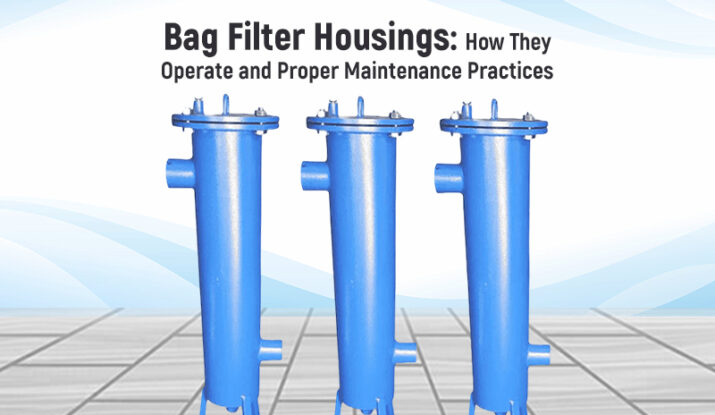
Bag filters are used in both commercial and industrial applications to remove silt, other particles, and various types of liquid from water. Bag filter housings are a popular choice for water filtration due to their huge holding capacity, high flow rate, and simplicity of replacement. As the name indicates, a bag filter is a filtering material bag contained within a filter housing. This blog post shares bag filter housing types, their working, and maintenance tips.
How do bag filter housings operate?
Bag filter systems operate on a basic principle. The bag filter and the housing form a tight barrier, which prevents contaminants or unfiltered water from escaping. Only filtered water may pass through, and everything else remains in the filter bag. Each bag is made of durable materials that keep pollutants and other harmful particles out.
Types of bag filter housings:
A wide range of filter housings is available in the market, so it’s no surprise that customers are overwhelmed when selecting the right one. Here are some bag filter housing types:
Single or multiple bag filter housing
Filter housings are classified into two varieties based on the number of filter bags they contain. The single bag housing can only hold one bag filter, as the name implies. Because it can carry more than one filter bag, the multi-bag housing improves filtering efficiency and increases dirt-holding capacity.
Stainless steel or plastic bag filter housing
The bag housing may be categorized into two types based on the raw materials used: stainless steel and plastic. When dealing with harsh operating circumstances or tight hygienic standards, a stainless steel housing is essential. Plastic bag housings are affordable and require a lower initial investment. It is ideal for water treatment and may be compacted with non-hazardous chemicals.
Top or side bag filter housing
A filter housing has two major flow directions: top inlet and side inlet. For top-in filter housing, liquid flows via the top design, leaving the least amount of unfiltered liquid for easy bag change and efficient filter bag sealing.
The side input pipe connection for the filter housing may be changed to different orientations depending on the demands. The housing has a basic structure and is easy to clean inside.
Maintenance Practices of Bag Filter Housing:
- Check the cleaning system’s performance (including the compressors, dryer, and filter).
- Check the diaphragm and solenoid operation.
- Check moving parts for wear or malfunction.
- Check the compartment inside visually for leaks.
- Remove the sample bags for permeability flow testing.
- Check the fan functioning.
- Replace any defective bags.
- Lubricate high-wear components.
- Clean tubesheets.
- Dye-test each container to check for leaks.
- Inspect the access door gaskets.
- Inspect the ducting and hopper baffles.
- Adjust dampers and valves.
Conclusion
Bag filters from GTS Filters and Systems are available in a variety of shapes, sizes, and media types to meet your unique requirements. We are the industry’s leading manufacturers and suppliers of bag filter housings. Our unique selling point is product quality and 24/7 customer assistance. For any questions about inquiries or product purchases, please contact us now.