
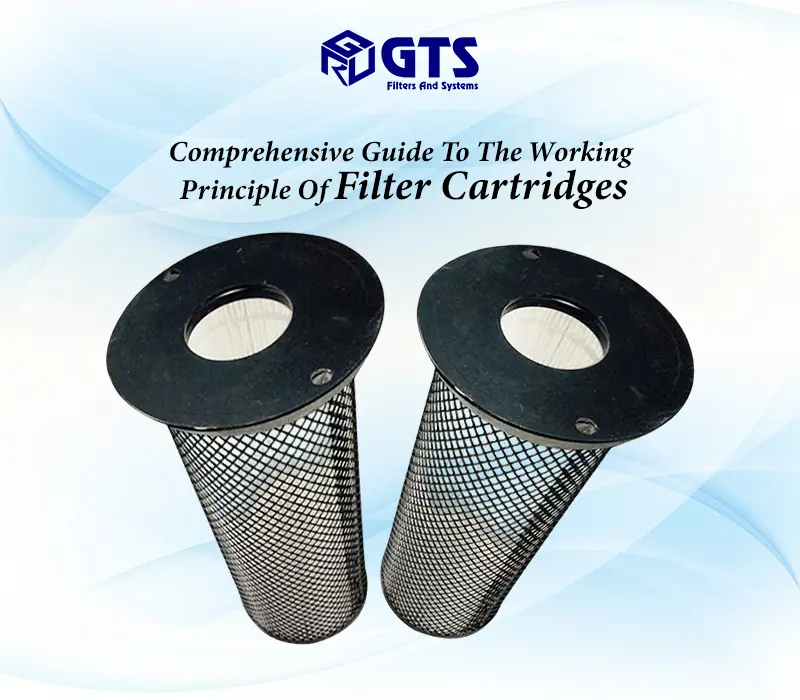
Filter cartridges are small, but they play a big role in keeping liquids and gases clean in industries like water treatment, chemicals, and food processing. They remove dirt, dust, rust, and other particles that can damage equipment or affect product quality. At their core, filter cartridges work by letting the fluid pass through a porous material that traps unwanted particles. Depending on the type, like pleated, string-wound, or activated carbon, the filter captures different sizes and types of contaminants. The clean liquid or gas then flows out, leaving behind the impurities inside the cartridge. Using the right filter cartridge helps machines run smoothly, reduces maintenance, and improves efficiency. Understanding how these cartridges work ensures you pick the right one for your needs, avoid downtime, and maintain consistent quality in your process.
The Filter Cartridge Working Principle: How It Traps Dirt
You don’t need a degree in fluid dynamics to get this. The filter cartridge’s working principle relies on two main methods to get the job done:
- Mechanical Straining (Surface Filtration): Think of this like a screen door. It stops particles that are larger than the holes in the media. It’s great for high-flow, consistent particle sizes.
- Adsorption and Tortuous Paths (Depth Filtration): This is for the fine stuff. As fluid winds through the thick layers of the cartridge, the particles get stuck in the “maze” of fibers.
The Flow Path: Outside-In
In almost every industrial application, the fluid flows from the outside to the inside.
- The Intake: Raw fluid hits the outer surface of the cartridge.
- The Barrier: The media (polypropylene, cotton, or synthetic) traps the solids.
- The Core: Cleaned fluid passes through to the center tube and exits through the bottom or top of the housing.
Understanding Micron Ratings and Delta P
When talking about how filter cartridges work, two things are key: micron rating and differential pressure (Delta P).
- Micron Rating: This tells you the size of particles the filter can catch. A 5-micron filter traps much smaller particles than a 50-micron one. Think of it like a sieve, smaller holes catch finer dirt. Choosing the right micron rating ensures your system stays clean without clogging the filter too quickly.
- Pressure Drop (Delta P): As the filter captures dirt, it gradually fills up. This causes pressure to rise on the inlet side and drop on the outlet side. Experts don’t wait until the flow stops completely. Most replace cartridges when the differential pressure reaches 15–20 PSI. Waiting too long can cause “unloading,” where trapped dirt gets pushed back into your clean line, defeating the purpose of the filter.
Keeping an eye on micron rating and Delta P ensures your system runs smoothly and efficiently.
Why Proper Selection Matters
You can’t just throw any filter cartridge into a housing and hope for the best. You have to match the material to the chemical compatibility of your fluid. If you’re running high-temp liquids through a standard poly-spun filter, it’s going to melt and wreck your pump. Always check your flow rate. If you try to push 50 GPM through a cartridge rated for 10 GPM, the filter cartridge won’t be able to keep up, and you’ll see a massive pressure spike immediately.
Conclusion
Filter cartridges play an important role in keeping liquids and gases clean, protecting equipment, and maintaining product quality. Understanding how they work, including micron ratings and differential pressure, helps you choose the right cartridge and avoid downtime. Regular monitoring and timely replacement prevent dirt from getting back into your system. At Guru Technology, our filter cartridges are designed for reliable performance, easy maintenance, and long-lasting efficiency, ensuring your processes run smoothly and your equipment stays protected.